


EXTENDED Abstract submission: 20 May 2026
Message from SMIC26 Conference Chair

Email Professor Hom DhakalI would like to welcome you to the PCAMM's International Conference on Sustainable Materials and Innovations for Circularity (SMIC26) which will focus on sustainable composite materials, advanced manufacturing, key advancements and challenges featuring design, innovation and sustainability. The conference will provide a platform for collaboration, networking and knowledge exchange between academia, industry and government sectors.
We look forward to welcoming you in Portsmouth.
Important dates
- Abstract submission opens: 28 February 2026
- EXTENDED Abstract submission deadline: 20 May 2026
- Conference registration opens: 28 February 2026
- Author notification for acceptance of abstract: 30 May 2026
- Conference Dates: 10-11 September 2026
- Conference Dinner: 10 September 2026
- Full paper submission: After the Conference
Organising committee


Plenary speakers

Professor Amar Mohanty
University of Guelph, Ontario, Canada
Director of the Bioproducts Discovery and Development Centre & Research Excellence Chair in Sustainable Materials at the University of Guelph, Canada.
An Internationally recognized leader in sustainable composites, bioplastics and circular biomaterials Google Citations: 73,051 & h-Index: 126 (535 Journal papers & 81 patents)
Received many awards- including the Prestigious Miroslaw Romanowski Medal for his significant scientific contributions to the resolution of environmental problems from the Royal Society of Canada, Prof. J. L White Innovation Award from the Polymer Processing Society & the Lifetime Achievement Award from the BioEnvironmental Polymer Society.
Fellow from 6 professional societies – including being a Fellow of Royal Society of Canada, American Institute of Chemical Engineers and Society of Plastic Engineers
Co-Editor-in-Chief of Composites Part C (Elsevier)
Plenary Talk Subject: Circular Bioplastics – A 25-year journey
This presentation will highlight a 25-year journey; profound and long-term endeavors in transforming bioplastics and their green composites for sustainable packaging uses. Plastic has become an integral part of our society. We use plastic for several uses from food packaging to high-end uses in transpiration and medical products. At present around 450 million tons of plastics are produced per year globally which is expected to exceed 1-billion tons annually by 2050. Although we avail all the comforts from plastics the waste generated after their use has created huge environmental concern. Most of the plastics produced are used in packaging sector; 50 percent of which is in single-use plastics uses including plastics bags, cutlery, straws, take-away containers to name a few. The short lifetime of these plastics ranging from few hours to days to months create waste disposal management concern that is crucial and challenging. Many counties across the globe have banned and/or in process to ban their single-use-plastic uses which are not recyclable ending in landfilling thus producing huge greenhouse gas emission. Do we have a viable alternative? Biodegradable and compostable (both industrial and home compostable) plastics and composites show promise in alleviating such plastic waste problem. However, an integrated approach is needed to adopt the required policy, incentives and the opportunities for the proper end-of-life option for those biodegradable products. The successful integration of such biodegradable materials can relieve the environmental concern around single-use plastic use that can support circular economy; a move towards zero plastic footprint.

Professor Manjusri Misra
University of Guelph, Ontario, Canada
Dr. Manjusri Misra is a Professor and Tier 1 Canada Research Chair (CRC) in Sustainable Biocomposites in the College of Engineering, Department of Interdisciplinary Engineering and Department of Plant Agriculture (Cross-appointed) at the University of Guelph. Dr. Misra’s research on novel sustainable materials helps in reducing the global reliance on fossil-based polymers, lowering greenhouse gas emissions, and minimizing waste. Her innovations promote a circular economy and advance the United Nation’s Sustainable Development Goals. She is a Fellow of the Royal Society of Canada, the Royal Society of Chemistry (UK), the American Institute of Chemical Engineers (AIChE), the Indian Institute of Chemical Engineers (IIChE), Indian Chemical Society (ICS) and the Society of Plastic Engineers (SPE). Dr. Misra has received many awards including the Andrew Chase Forest Products Division Award from the AIChE (2017), the Natural Sciences and Engineering Research Council of Canada (NSERC) Synergy Award for Innovation (2018), the Lifetime Achievement Award from the BioEnvironmental Polymer Society (BEPS) (2021), Professor P.K. Bose Memorial Award from Indian Institute of Chemical Engineers (IIChE) (2025), and the James L. White Innovation Award from the Polymer Processing Society (2026). She was honored as one of Canada's Most Powerful Women 2020 by the Women Executive Network. She is among the recipients of Global 50 Women in Sustainability™ Awards 2024 by The SustainabilityX® Magazine, for demonstrating exceptional leadership in sustainability and driving transformative change across the globe.
Plenary Talk Subject: Advanced Biocarbons from Sustainable Resources and their Applications in Manufcaturing: A Move for 2050 Net Zero Transition
Biocarbon (biochar) is a high-carbon solid produced from biomass at high temperatures with limited oxygen, similar to the material found in Amazonian “terra preta” soils. Traditionally used for fuel, soil improvement, filtration, and agriculture, it is now gaining interest in material science for sustainable applications. New uses include composites, energy storage, supercapacitors, and environmental remediation, supporting a circular carbon economy.
Biocarbon-based composites can be manufactured using methods like 3D printing and are increasingly used in automotive parts, replacing carbon black in materials like rubber. Overall, advanced biocarbon materials offer strong potential for green manufacturing, supporting CO₂ capture, hydrogen safety, and net-zero targets by 2050.
Keynote speakers

Professor Mikael Skrifvars
University of Borås, Sweden
Mikael Skrifvars has been since 2003 Professor of Polymer Technology in the Swedish Centre for Resource Recovery at the University of Borås. He is currently leading the Strategic Research Area Resource Recovery, and he was previously the Head of the Department of Textile Technology at the University of Borås. Before starting his work in academic, he worked in the chemical industry for almost 20 years, as researcher and project manager. His PhD thesis topic was synthetic modification of unsaturated polyester thermoset resins, which was defended in 2000 at the University of Helsinki in Finland. His research focuses on the development and studies of polymer materials which are adapted for the circular economy, which includes recycling and recovery as well as production of polymers from renewable and biodegradable raw materials. The aim is to understand how polymers can be produced in a sustainable way, so that the properties can be optimised for recycling and recovery, without sacrifice of their performance and durability. The expertise includes knowledge on the processing of polymers by extrusion, injection moulding, filament melt spinning and 3D printing.
Keynote Talk Subject: Biocomposites in the Circular Economy – Opportunities and Challenges
Composites are today very important materials in many applications, and especially in components and product where low weight, high strength and durability are important. So far composites are made from fossil polymers as the matrix component, while the reinforcement is glass fibre or carbon fibre, which both are produced from fossil resources. Fossil based polymers are today associated with several environmental challenges; they are made from crude oil, they cause plastic waste pollution in the oceans, they are persistent and not biodegrading, and they result in micro plastics, which have been found even in the human body. These challenges are also relevant for composites, and biobased, non-fossil composites are today seen as a viable alternative materials in many applications. Natural fibres such as flax, hemp and jute are used as textile reinforcements, and biopolymers such as poly lactic acid (PLA) can be used as thermoplastic matrix polymer. Biobased thermoset alternatives have also been introduced, such as epoxy resins and unsaturated polyesters. This talk will discuss the opportunities and challenges associated with biocomposites, and will present some ongoing research related biocomposites at University of Borås.

Professor Koon-Yang Lee
Imperial College London
Koon-Yang Lee (CEng, FRSC) is Professor in Polymer Engineering at Imperial College London. His research centres around chemical engineering-driven material innovations to create a sustainable future, with specific foci on (nano)cellulose-derived advanced materials, (ligno)cellulose-derived sustainable materials and waste-derived engineering materials. He is the recipient of the 2022 KINGFA Young Investigator Award of the American Chemical Society’s Cellulose and Renewable Materials Division, an award that recognises outstanding contributions by young investigators (<40 years old) to the science and chemical technology of cellulose and renewable materials, for his pioneering work into nanocellulose advanced materials. He has (co-)authored >100 papers, 11 book chapters, edited 1 book and holds two US patents. To date, he has raised over £20m in research (incl. a prestigious EPSRC Prosperity Partnership with Unilever to tackle plastic waste and a BBSRC Engineering Biology programme on sustainable leather alternative).
Keynote Talk Subject: “Tapping into waste” - Direct upcycling of unrecyclable household waste into biodegradable high‑performance biocomposites
In the UK, post-consumer waste is sent to materials recovery facilities (MRFs) to separate the metals, plastics, paper and cardboard for subsequent recycling. However, a significant portion of materials sent to MRFs are rejected. Here in this work, I will discuss our proposed pathway that directly transforms the recovered lignocellulosic pulp from MRF rejects and its enzymatic post-hydrolysis solids (PHS) into biodegradable poly(L‑lactide) (PLLA) composites. Both MRF-recovered lignocellulosic pulp and PHS act as effective nucleating and reinforcing agents, doubling the crystallinity of PLLA and increasing its tensile modulus to ~6 GPa while maintaining comparable strength (~60 MPa). By comparison, PLLA at a similar crystallinity possessed only a tensile modulus and strength of 2.5 GPa and 42 MPa, respectively. The resulting biocomposites also show accelerated biodegradation under simulated industrial composting compared to PLLA, achieving complete disintegration within 30 days. This work provides the first demonstration of directly upcycling unrecyclable MRF reject streams into structural, fully compostable materials, revealing a viable, low‑carbon route to integrate post‑consumer and secondary wastes into a closed‑loop circular economy.

Professor Jawaid Mohammad
United Arab Emirates University
Prof. Dr. Jawaid Mohammad is currently working as a distinguished professor in the Department of Chemical and Petroleum Engineering, College of Engineering, United Arab Emirates University, Al Ain, United Arab Emirates. He has more than 25 years of experience in teaching, research, and industries. His area of research interests includes hybrid composites, lignocellulosic reinforced/filled polymer composites, advance materials: graphene/nanoclay/fire retardant, modification and treatment of lignocellulosic fibers and solid wood, biopolymers and biopolymers for packaging applications, nanocomposites and nanocellulose fibers, and polymer blends. So far, he has published 100 books, more than 100 book chapters, more than 500 peer-reviewed international journal papers, and several published review papers under top 25 hot articles in science direct during 2013–2020. He also obtained 6 Patents and 6 Copyrights/Industrial design. H-index and citation in Scopus are 108 and 48691 and in Google scholar, and H-index and citation are 129 and 65051. 40 Ph.D. and 17 Master’s students graduated under his supervision in 2014–2024 in the fields of hybrid composites, green composites, nanocomposites, natural fiber-reinforced composites, nanocellulose, etc. Presently supervising 5 PhD and 2 Master students. He secured various research grants at university, national, and international levels on polymer composites of around USD 5 Million. He also delivered plenary and invited talks in international conferences related to composites in India, Turkey, Malaysia, Thailand, United Kingdom, France, Saudi Arabia, Egypt, China, Germany, Indonesia, Spain, UAE, Portagal, etc. Besides that, he is also a member of technical committees of several national and international conferences on composites and material science. He is founding Series Editor of Springer Three Book Series and one Book Series from CRC Press. He worked as guest editor of special issues of Several Peer reviewed Journals. Besides that, he is also reviewer of several high-impact international peer-reviewed journals of Elsevier, Springer, Wiley, Saga, ACS, RSC, Frontiers, etc. Dr. Mohammad Jawaid also received Several Award at National and International Level. He is also Winner of Newton-Ungku Omar Coordination Fund: UK-Malaysia Research and Innovation Bridges Competition 2015. He is also Professional membership of ACS, SPE, APA, MySET, etc. He is Fellow and Chartered Scientist of The Institute of Materials, Minerals & Mining (IOM3), UK. He is also Clarivate 1% Highly cited Researcher-2023.
Keynote Talk Subject: "Biocomposites from Date palm Biomass towards Circular Economy"
Date palm biomass is a highly abundant agricultural residue produced through the cultivation and harvesting of date palm trees, primarily in arid and semi-arid areas. Heavy amounts of fronds, fiber, leaves, trunks, seeds, and fruit bunch residues are frequently underutilized or incinerated and landfilled, leading to environmental problems. One sustainable way to produce low-cost, lightweight materials suitable for many applications is through environmentally friendly biocomposites, which can be obtained by direct conversion of this biomass. The low density, biodegradability, renewability, satisfactory mechanical strength, and abundance make date palm fibers attractive as reinforcement for polymer, cementitious, and bio-based matrices. These biocomposites are applicable to packaging, construction panels, automotive components, furniture, thermal and acoustic insulation, biomedical materials, and environmental remediation products. The performance of date palm biomass-based biocomposites depends on fiber type, particle size, matrix compatibility, processing method, and surface treatment. These treatments include a range of chemical and physical methods that enhance fibre–matrix adhesion, moisture resistance, durability, and mechanical behavior. Recent trends are also focused on hybrid composites, green polymers, and value-added solutions to promote the circular economy. By substituting for synthetic fibers and non-renewable materials, date palm biomass biocomposites have the potential to both mitigate environmental impacts and stimulate economic opportunities in date palm-producing regions. This keynote talk will showcase the sustainable potential of date palm biomass (both raw and processed) as a reinforcement material, with a discussion of its properties, processing methods, Challenges for development, and industrial applications towards the circular economy.
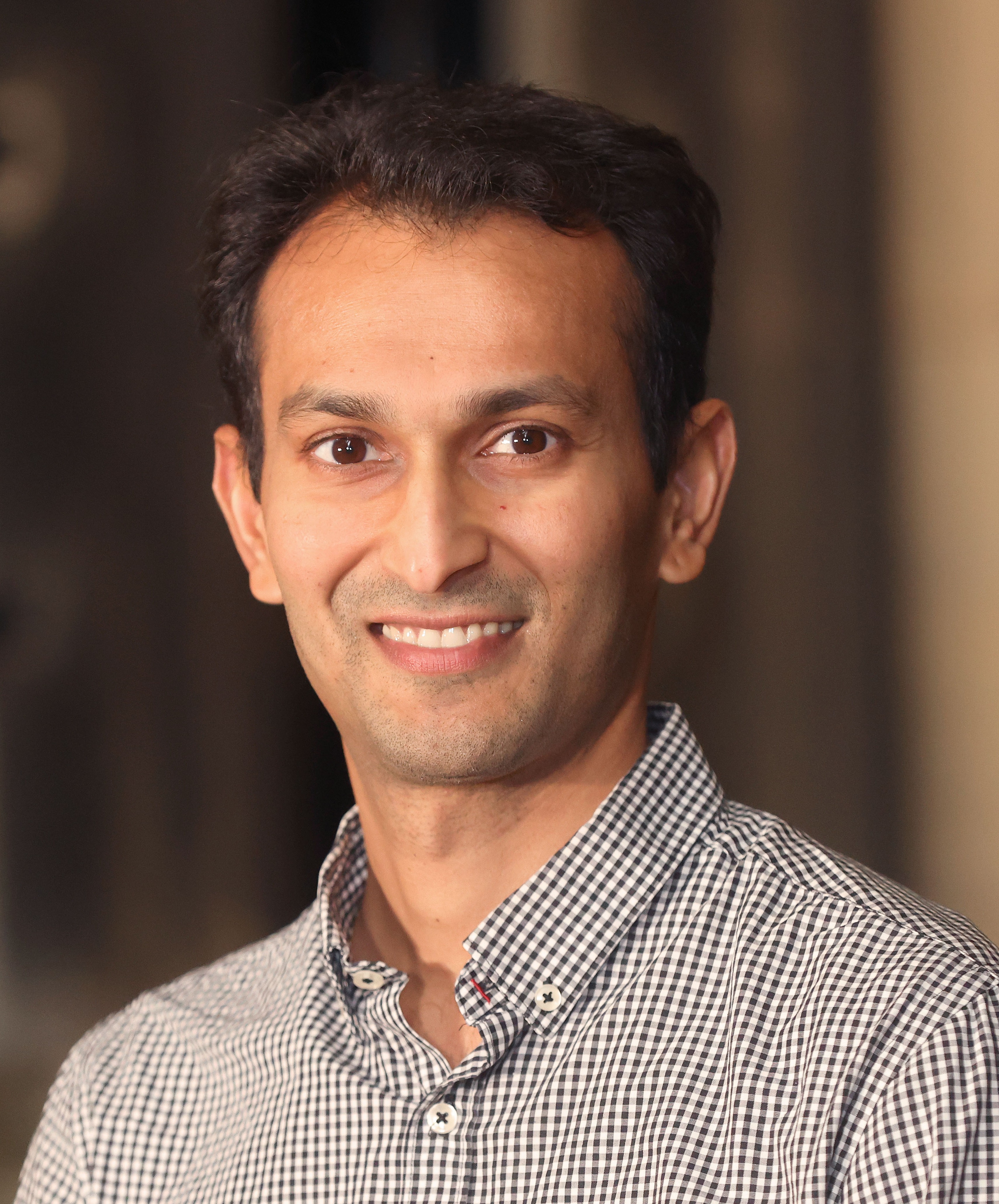
Dr Darshil Shah
University of Cambridge
Shah is Associate Professor in Materials Science and Design at the University of Cambridge’s Department of Architecture, and co-leads the Centre for Natural Material Innovation (CNMI). Understanding the relationships between materials, society, technology, history and nature, Shah’s research aims to design and innovate with natural materials by exploring low-energy methods of manufacture, improving structural performance, introducing multifunctionalities, translating across disciplines and application sectors. A megawatt wind turbine with a wooden tower and flax biocomposite blades. An affordable ankle-foot disability orthosis from recycled plastic waste. An off-grid low-energy house constructed from industrial hemp materials. A room-temperature processing method for silk-like textile fibres. A green policy that weaves agroforestry and construction in a circular bioeconomy approach enabling aggressive decarbonisation. These are examples of how Shah’s research and design at the CNMI imagines the replacement of anthropogenic materials with bio-based materials, such as engineered timber, bamboo, natural fibres and their composites. Shah has been awarded over £16million in total research project activity. Shah’s work is published in over 80 peer-reviewed journal papers, has attracted numerous awards such as the International Quadrant Award 2015 and the JEC Asia 2013 Innovation Award, has been exhibited at the Cambridge Botanic Garden Walking Trail 2023, Dutch Design Week 2021, London Design Biennale 2021 and 2023, and Royal Society Summer Science Exhibition 2019, and regularly appears in international media such as on BBC, Reuters, Guardian, Dezeen, and Telegraph.
Keynote Talk Subject: "Towards circular design with natural material innovations: cricket as a case study (and beyond)"
As pressures mount to decarbonise industry, reduce material waste, and rethink extractive supply chains, natural materials offer new opportunities for circular design across products, buildings, and manufacturing systems. This talk explores how bio-based materials — including bamboo, engineered timber, flax/hemp, and their biocomposites — can enable low-energy, regenerative, and socially inclusive futures through innovations in design, fabrication, and circular economies. Using cricket as a central case study, the talk examines how material innovation can address both environmental and social challenges. Conventional cricket equipment relies heavily on resource-intensive materials and increasingly fragile global supply chains, exemplified by shortages of English willow for cricket bats and the widespread use of synthetic foams, plastics, and leather alternatives in protective gear. Drawing on research from the CamBoom project and related work on circular cricket equipment, the presentation explores the development of affordable bamboo cricket bats, circular and bio-based protective equipment, and emerging practices of repair, reuse, and remanufacture within sporting cultures. Beyond sport, the talk connects these ideas to broader research on circular (timber) construction, circular (natural fibre) textiles, and bio-based manufacturing systems. Across scales — from products to buildings — the presentation argues that circular design requires not only new materials, but new relationships between ecology, technology, craft, industry, and everyday use.
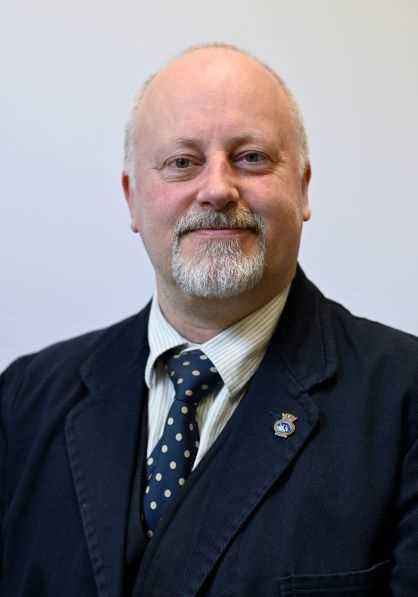
Professor Ian Hamerton
University of Bristol
Ian Hamerton is a chemist by training and the NCC Professor in Polymers and Sustainable Composites in the Bristol Composites Institute (a joint appointment with the University of Bristol and the NCC). He is the Research Director for the CoSEM Centre for Doctoral Training (CDT) (EP/S021728/1) and performed the same role for the ACCIS CDT (EP/L016028/1). Internationally recognised for his research in the field of high performance polymers and composites for extreme environments, he has published some 230 papers (11645 citations, h-index of 48), 3 edited books, 9 invited chapters, 8 review articles, and 8 granted patents. He has been associated with research and teaching grants and studentships in excess of £21M (with £6M as PI). The £1M grant as PI from the Engineering and Physical Sciences Research Council (EP/P027393/1) led to the industrialisation of the HiPerDiF technology and the spin out of Lineat Composites, of which Ian was a founder member). To date, he has co-supervised 75 doctoral students to completion (41 as PI) and is currently associated with a further 16. He has been an EPSRC Peer Review College member since 2007 and a member of the Editorial Board of Polymer International for >30 years.
Keynote Talk Subject: "From Sail to Structure: recycling end-of-life sails by carbon fibre reclamation and composite remanufacture"
The HiPerDiF (High Performance Discontinuous Fibre) technology is a patented process that was developed at the University of Bristol to align short (3-10 mm) fibres, offering a means to repurpose reclaimed fibres from end of life composite systems to manufacture engineered components. This talk will present the results of a PhD project undertaken by Dr Marcelle Hecker in collaboration with North Sails to reclaim the valuable carbon fibre content from 3Di racing sails via a variety of reclamation processes, and remanufacturing the reclaimed, short carbon fibres into aligned, discontinuous fibre reinforced (ADFR) prepreg-like tape. This ADFR tape, made from reclaimed fibres from an end-of-life sail, was used to manufacture two technology demonstrators including a sail batten. This is an example of how the ADFR tape could be incorporated into current manufacturing processes used in the sailing industry to produce semi-structural components for yachts.
Conference topics
The SMIC26 conference will run a series of sessions in various thematic areas related to sustainability, materials, innovations and circularity.
Each delegate can present one conference contribution, where 20 minutes will be provided to the presenter including questions.
- Bio-based composite materials
- Bio-inspired materials
- Bio-inspired designs and innovations
- Functionalisation of bio-based materials
- Performance enhancement techniques for composite materials
- Treatments of natural fibres
- Composites for innovative applications
- Numerical techniques for performance prediction of composites
- Recyclability and valorisation of composite materials and structures
- Sustainability in civil engineering
- Additive manufacturing (polymers, composites)
- Structural property relationships of sustainable composite materials
- Environmental durability of composite materials
- Digitisation/smart manufacturing of composite material and structures
- Sustainable polymers (packaging, electrical/electronic applications)
Scientific Committee
- Mohammad Jawaid, United Arab Emirates University, UAE
- Mikael Skrifvars, University of Borås, Sweden
- Fabrizio Sarasini, Sapienza University of Rome, Italy
- Gianluca Cicala, University of Catania, Italy
- Dipa Roy, University of Edinburgh, UK
- Darshil Shah, University of Cambridge, UK
- Vincent Placet, University of Franche-Comté, France
- Sanjay Mavinkere Rangappa, King Mongkut's University of Technology North Bangkok, Thailand
- Sunny Zafar, IIT Mandi, India
- Fabrizio Scarpa, University of Bristol, UK
- Carlo Santuli, University of di Camerino UNICAM, Italy
- Erdem Selver, K. Maras Sütçü İmam University, Turkey
- R. Gnanamoorthy, IIT Madras, India
Conference location
- Portland Building, University of Portsmouth, UK
- Portland Building
Portland Str.
University of Portsmouth
UK
PO1 3AH
The University of Portsmouth is located in Portsmouth, the south coast of UK, in the historical city centre of Portsmouth and 1,5 hrs from the city of London and other historical cities.
How to reach Portsmouth
- Direct train service from London Gatwick airport, final destination: Portsmouth and Southsea Station. Trip duration 1,5 hours.
- If travelling from London Heathrow airport, there is a direct bus to Woking and then a train service to Portsmouth and Southsea Station. Alternatively, a National Express bus can be used.
Hotel suggestions
- Premier Inn Portsmouth Dockyard. 3-minute walk from Portsmouth Harbour station. 8-minute walk to Portsmouth University/Portland building. 7-minute walk to the Conference Dinner location
- Royal Maritime Club. 4-minute walk from Portsmouth Harbour station. 7-minute walk to Portsmouth University/Portland building. 8-minute walk to the Conference Dinner location
- Holiday Inn Express, Gunwharf Quays. 5-minute walk from Portsmouth Harbour station. 9-minute walk to Portsmouth University/Portland building. 2-minute walk to the Conference Dinner location
- Travel Lodge Portsmouth City Centre. 3-minute walk from Portsmouth & Southsea train station. 3-minute walk to Portsmouth University/Portland building. 15-minute walk to the Conference Dinner location
- Hotel Ibis, Portsmouth Centre. 4-minute walk from Portsmouth & Southesea train station. 3-minute walk to Portsmouth University/Portland building. 15-minute walk to the Conference Dinner location
- Keppels Head Hotel. 3-minute walk from Portsmouth Harbour station. 8-minute walk to Portsmouth University/Portland building. 7-minute walk to the Conference Dinner location
Abstract Submission
EXTENDED Deadline for submission of abstracts
20th May 2026
Important Notes
- The language of communication at the Conference will be English, and all abstracts must be written in clear English.
- All accepted and paid abstracts will be collected in a book of proceedings online.
- 1 Registration = 1 Abstract
- Every delegate should register and pay registration fees
- ORAL Presentations or Poster Presentation

Portsmouth Centre for Advanced Materials and Manufacturing
We're undertaking fundamental and applied research in Materials Science and Engineering Technology with the focus of contributing UN’s Sustainable Development Goals.