


Beyond the Classroom
Hear from University of Portsmouth graduates in this inspiring webinar series.
Join us as we hear from graduates from across disciplines, with live events throughout the year as well as event recordings available below.
These graduates started their journeys as students here, experiencing our city as students continue to do every day. You'll hear how, with a sprinkle of innovation, creative-thinking and a go-getting attitude, they’ve gone on to build successful careers.
Our speakers have worked in a variety of sectors including fashion, digital marketing, finance, environmental, defence and even personal grooming.
Julian Sawyer: Co Founder of Starling Bank and former CEO of Bitstamp
Image
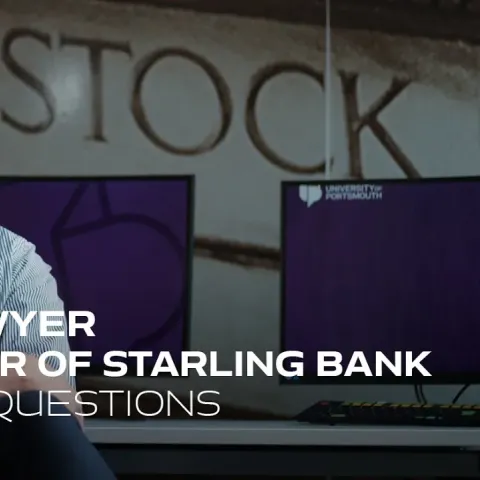
Julian Sawyer gives us a fascinating insight into the future of money in the face of ever-evolving technology.
BA (Hons) Business Studies (1991) alumnus Julian co-founded Starling Bank in 2014 — a digital challenger bank in the UK that now has over three million accounts. He was also formerly the Chief Executive Officer at Bitstamp, the world's oldest crypto exchange with over 4 million customers. Julian has been an advisor to the board of the leading Australian challenger bank, Volt, and an advisor to a number of financial services businesses in Europe, the US, and Dubai.
With FinTech causing disruption and cryptocurrencies promising revolution, Julian discusses whether these forces are aligned with traditional financial services – or in opposition. Julian reflects on lessons and experiences from his time studying at the University of Portsmouth and how it laid the foundation for future success. Sharing his personal business journey, he highlights key challenges, obstacles, and solutions required to reach the summit with an insider’s view of what it takes to succeed.
Exploring how the landscape has changed in a volatile world, Julian provides a thought-provoking dive into the industry and investigates what the future of money could look like.
I'm Julian Sawyer. I'm the co-founder of Starling Bank in the UK and also ex CEO of Bitstamp, a crypto exchange.
*Music Playing*
Good evening, It's great to be back in Portsmouth. I haven't been here for a long time, so it's really good to be here.
I'm going to talk about the future of money, and I'm going to do it in two parts.
I'm going to talk about fintech and then I'm going to talk about crypto. And you could argue that the fintech side is a little bit near.
It's now, it's happening today, and then the crypto one is starting to emerge and it's going to be massive in the future.
Don't worry I'm not going to pick on anybody here, so I want your honest - can you put your hands up if you bank at Lloyds Bank?
Okay. Can you put your hands up if you bank at Starling, Monzo, Revolut or any other fintech?
Okay. That's the future of money. Okay.
Lloyds Bank has 24% market share of the current account market.
That would have been everybody up to about here should put their hands up. We didn't get that.
Why? So if you look at what a fintech is.
It's a mix of 'Fin' - Financial and Technology. A lot of people call themselves fintechs and they're great at tech and just rubbish at financial services and vice versa.
I remember being at a conference and the CEO of NatWest Bank, head of payments at NatWest Bank, I should say, said we are the the UK's oldest fintech.
It's like, No. What is fintech? What is it? It's much more about your behaviour and about your ability to deliver for your customers than it is about the size or scale of your organisation.
So I would challenge that NatWest can't be a fintech. How agile are they?
We talked about Challenger banks. What is a Challenger bank?
What it is is two very, very simple things. Number one, it's about total focus on the customer experience.
And number two, it's about executing faster. There were lots of things in Starling, which we did.
We had no idea whether they were going to work. We had a hunch, we had a theory, we had a hypothesis.
We didn't know. But if you can deliver that capability, that widget, that item on the on the app.
That capability, that insight. And it works fantastic.
But if that takes one or two software engineers one or two weeks, why don't you just do it?
What would a big bank do? That set up a steering committee.
They would have some business analysts writing some specifications. They're going to do some market sizing.
They'd probably spend some money on some consultants. And what would they get at the end of it? A de-risked plan that they then would take nine or 18 months to deliver.
The market's gone. When we started Starling in 2015, no mobile app in the UK allowed you to set up or create a new payee in your bank.
And you guys are probably thinking what's obvious, isn't it? Because a lot of banks thought that the mobile device was not as secure as a browser.
I've had the pleasure today of walking around the university. There's an awful lot of PCs out there which have got browsers on that is not as secure as your mobile that's in your pocket, which has got face ID, touch ID or whatever else security on it.
That was a complete fallacy. And so what happens is these big banks go into these big programs.
Let's just think about what the average duration of the head of technology in a big bank is.
It's 18 months. If you're going to do a big program, a big change program to deliver something, it's just not going to happen.
And you look at what Starling and Monzo and Revolut and all the other fintechs are doing, It is delivering it so much faster.
Spending time delivering, not spending, time analysing and assessing. It is really, really important.
And then this total focus on the customer experience. The apps look good.
It just works. It is obvious what it does. Let me give you a very simple example for those of you from Lloyds and other banks.
When I make a purchase on my card, my watch beeps before the till machine.
The point of sale device says you can pull the transactions approval and pull that out.
That did not happen in traditional banks. That happened because Starling and Monzo did Real-Time Payments for the first time.
That gives me some reassurance because if my phone beeps now, I think I know where my wallet is or my watches and my phone is.
I know that something's happened. I don't have to wait for my monthly statement. Can you imagine waiting for a monthly statement that comes in the post to tell you what you spent on your current account?
It just doesn't work anymore. So the question I think you've got is then why doesn't the big banks who have got customers absolutely have got profit?
Not all fintechs have. So, you know, that's great. And they've got multiple revenue lines, millions of customers.
All great stuff. Why aren't they operating at the same level as the fintechs?
And that's it's really, really simple. Five reasons.
Legacy Systems. Now we've heard about this. The technology is old.
We can understand that. You take out a mortgage, it's 25 years old. So that means your technology has to be able to cope with things that are 25 years.
Banks are run on systems that have been developed in the 1970s, 1980s.
If you're running a bank system on a 1990 platform, you're doing pretty damn well. You're in a good place if you're in a bank.
So you've just got this old technology. That is not new.
That is not modern, but also has been built on on top of each other and is just impossible to do anything.
These banks are spending 80, 90, 95% of all of their money.
Their change money, their IT money, their project management money on maintaining their current systems.
I used to say that starling spent zero when I used to say they probably spend a little bit, but still single digits of their total expenditure.
Is on new things, not on legacy. So you've got legacy systems.
Legacy staff. Staff are thinking the old way, not thinking agile, not thinking about the customer so much.
These staff also sit behind bullet-proof glass and hand money out. What is that all about I don't know.
And you've seen some banks who have actually then asked their staff to hold an iPad in front of that bullet-proof glass and welcome customers in.
They feel as uncomfortable as we do in that. So legacy staff, you've got the wrong people, the wrong mentality.
Dare I say it, Legacy customers. You've got customers who are expecting a multichannel.
Experience, branch, contact centre, web, mobile, etc..
That creates an issue. If you think of the UK population and have it in a jigsaw, what Starling did is when we love people who live their life on a mobile phone.
I did not say we are after the Millennials or the Gen Z or whatever. I said, those people who live their life on a mobile phone, it's not an age product and that is super important when you look at the future of money.
What the big banks have to do is they have to service everybody in the community. And that's that's right.
But it also has a huge oversight sorry overhead. So we got legacy customers.
legacy staff. legacy systems. The other one is legacy products.
I was talking earlier and, you know, we were kind of hypothesising that, you know, a medium sized bank, call it TSB, call it Santander.
You know, big, big bank. How many current accounts do they have?
Student, child, high net worth. Blah, blah, blah. Let's call it eight or ten.
Why? Starlling's got one. Think about every time you want to make a change.
Every time the law changes, every time you want to do something different, you've got eight or nine different ways times to do it.
Now think about channels. Web, mobile - add them all up.
You've got a matrix. 60 changes, 70 changes to make in a medium sized bank.
Monza has got one. How much faster is that? Do students need a different current account than when you start work?
No. It can be priced differently. Yeah. You can have a different car design if you want.
I mean, Monzo is great at that. But you don't need a different product. So you've got these legacy products.
And the final one is legacy KPIs. How are you measuring success?
And again, the big banks do it well.
Over the last few years, banks have said that they will look at how many products they can cross-sell to their customers.
And the golden number is 2.5 or 2.4 products to all of their customers.
I don't want that. That doesn't work for me as a consumer. I want the best product and I will go to ten banks for my ten products, if that makes sense.
So you've got a legacy KPI. We were talking earlier about when you run a contact centre, one of the big KPIs you have is the average handling time.
In other words, let's get that time as quickly as possible, get the customer off the phone and I can get to the next one.
Think about that from a customer service perspective. If you have got a problem, you want to spend as much time as you possibly can with your bank to help you.
Why is it in my interest as chief operating officer of Starling to make that as short as possible?
I want to be efficient. But I also want to make sure the customer service.
So what you've got, if you're going to go to those bigger banks, is you have got these legacy systems of products, customers, staff and KPIs.
It's not a happy place to be in. But what's the alternative? Alternative is the world of fintech.
Getting that balance right is super hard. And there's lots of examples where people have gone the wrong way.
Too much tech, not enough in. Growing too fast. You know, it's a good example which is in the public domain of N26.
It's a German bank. They grow so fast they didn't have compliance and risk and some of the control functions catching up with the growth of customers that are coming through the door.
When you're onboarding thousands of customers a day, that becomes a real worry.
And the regulator in Germany had to put the brakes on and say, slow down. So they had to slow down their customer acquisition, they had to spend a lot of money, they had to bring a lot of consultants in because you can't hire people quick enough.
You have to go to the contracting market and spend a lot of money. You look at their results, I think it was earlier this week it showed that made a loss.
Revenues went up and the losses went down because they grew too quickly. It's about getting that balance and that is that that is super important.
So I think when we look at the world of fintech, we also then need to unpack that a little bit because it's got a bit of a, you know, a fashionable, sexy type aura to it.
But are all fintechs the same? And I would argue not. For those of you who've looked and compared between Monzo and Starling they are both great products.
Okay, Monzo has made a very good position in the niche market. Niche probably one word scrap that one in the young market but haven't matured into the older market.
Starling is seen much more as the bank and there's a whole range of reasons that I could hypothesise as to why that was.
Decisions that we made at Starling and decisions that Monzo have made. Neither is right or wrong, they're just different, exactly the same product.
But you've also got some fintechs that are out there that are not the same.
And I'm thinking of organisations like Manny's. You might have heard of, which are, which is a great organisation in terms of coming new to country.
So if you've just visited the U.K. and you need a bank account, really, really tough market, absolutely horrible to try and make sure that you can open your bank account with that.
So Manny's does a great job with that. People like Tide in the small banking, small business banking market, but these are unregulated organisations.
And so immediately you're starting to see these two camps as those that are regulated, that are banks that protect your money just the same as Lloyds or HSBC will do.
And then you've got other organisations that are sitting there without that regulatory oversight.
Why is that important? Where if a bank goes bust in the UK, 85,000, your first £85,000 of savings is protected.
And I expect for all of us I'm talking about myself as well. That means all my money is protected. That's great.
That makes us comfortable. But if you go to one of these other companies, the protection is different.
It needs to be understood. And I think when you look at the regulation and you look at how these organisations are being marketed, it becomes really interesting about whether you understand that and going on the tube yesterday in London.
It was very there was just loads of adverts from Revolut and Tide and Manny's and all these other companies and it's like the language is exactly the same.
And yet as you know, someone in the industry is a subject matter expert. I know that's not as good as that or not safe as that and has protection.
And that becomes really interesting. And what we don't hope for but might happen is if one of these organisations fail and exposes the position around the regulatory status.
So what else is often techs good for? They are technology companies.
Okay. They do tech that just happens to be in banking.
Very different mindset than everything else. But what does that what does that mean?
It means that the. Chief Information Officer, the Chief technology Officer is very, very powerful.
They are thinking about the technology and how to improve the lives of us as individuals, but also that delivery.
And that is that that again, is really important in terms of that focus within the business.
And it's getting that balance between fin and tech, right.
If you take a step back from from this, what you see is a disruptive influence within the market.
There's a question about why the U.K. market is one of the most buoyant fintech markets in the world, followed by Europe, but not the United States.
And you would think, why is that? Two primary primary reasons.
Number one, the regulators and the government in the UK said we want more banks.
We have six big banks. We don't have enough. If you look at Australia, they've only got four banks, another smaller country in population, but they've only got four banks and they've got competition issues as well.
And the World Commission does that. But it's really important that we get new banks. And if you think that Metro was the first bank in, I think 100 years to be authorised, that shows how poor we are at getting competition in and that becomes important.
The second part is around the challenges in the technology on the mobile phone, on security and what do we want?
We want to be able to use our financial products when we're on the bus, on the train.
We don't want to have to go home, log on to the computer, get the browser out, go through that. Has anybody got one of those PIN things where you have to put the pin and the card in - what the hell is that?
Okay, it's just the wrong thing. Why do some banks do it and some don't?
I think I've explained the reasons why, but that is why this is this is super important.
What it means is that if you want to do pensions as wealth, it wealth divide the pension, be, etc.
fantastic. If you want to do international remittance payments and paying overseas, you've got Wise, you've got a whole range of other organisations, current accounts we've talked about and you just keep growing into the solutions that we are all for.
Those of us who live our lives on a mobile phone, very, very comfortable in managing our financial affairs over multiple accounts or multiple providers and getting the best of breed.
The danger is for the people who are with those legacy banks who don't know what good looks like.
And then are thinking about are they getting the best deal? Are they getting the right customer service?
Are they getting the right products and the right and the right user insights and information?
Therefore, I think what we're looking at when we talk about the future of money is very clearly a direction of travel.
And unfortunately, it is not going to come. And I think you've probably picked this up for me already. It's not going to come from the big guys.
The big banks are not going to get there. Because it's just too hard.
It's interesting, a few years ago, RBS, obviously now called NatWest, created a couple of spin off banks completely standalone.
One was called Bo Swedish for Money or something.
In England we call BO body odour, but something else. I don't know where branding came from on that.
And in the in the they co-created another company called Metal in the SME space, the small business banking space both have failed.
Because they were controlled and managed by the mothership and they couldn't get people with the right mindset.
What was quite interesting is the CEO of Bo phoned us up and went.
Could you come help me? And we were of course, we would love to help RBS do something.
RBS just to give you a perspective, is the biggest payment institution in the United Kingdom. They run the whole of the government's payroll, so the Department of Work and Pensions and everything else - huge.
They could not get their technology fast enough for Bo to integrate and so they came to us and they paid us money to do payments.
And we loved that. Just goes to show that even internally, an organisation can't unlock that.
So I think when we look at this, it is about mindset. It's about challenging the status quo, whether that's via technology, whether it's about your customer experience, it's about your behaviours as well.
A very good friend of mine was quite senior at a bank and we were at mine and we're having a glass of wine or two, probably too many.
And he said, Julian, sell your shares at Starling and get out. I went why?
I'm going to give you a direct quote. He said, We've had a steering committee today.
And we've decided to go digital. Steering committee.
Bureaucracy - what is a steering committe? we've never had a steering committee at Starling ever.
Decided to go digital. That's like saying, I've decided to breathe today.
You either are digital or you are not. At that point, if I could have bought any more shares, I absolutely would have done.
Because if that is that mindset, if that's what they thought. And he was really serious.
It's just the wrong answer. So I've answered part of the exam question.
It is a bit scary having the picture up there. So I'm trying not not, not, not, not to look. But I've asked a bit of the question on the future of money.
I think it's about the customer experience, the product, what we're doing, what other organisations are doing.
And there are some great examples of innovation that that is that is coming up. But let's now flip to slightly longer timeframe in terms of of crypto.
And I think if I were speaking to you a year ago, that probably be a little bit more buzz.
The spare seats would have been full and everybody will be buying and selling a bit of Bitcoin because the price was last year was going up at a crazy rate.
Let's let's just unpack a few things, make sure everyone's on the same page, and then we'll build that up again. If you think about what crypto is.
It's a fallacy in a number of different ways. First of all, cryptocurrencies, it's not a currency.
I'm sure some of the professors can have a very good debate about whether it is or it isn't, etc..
It's not the pound. It's not the dollar. Okay. But it is a method of transferring value.
And you can argue that currencies is about transferring value, but let's not get into the currency bet or the crypto bit.
We should think about it as digital assets. And it's based on some technology called the blockchain.
And the blockchain is. I am going to explain it. It is a very robust, well-accepted technology which enables us to be able to do something on the computer and that we have a complete and utter record of what has happened.
And you can all read up and get some better and stronger definitions of this.
If you think of what the blockchain is, it's like your iPhone. It's a piece of tech.
And Bitcoin, Etherium and all of the other ones are the apps on your phone that the application of that technology.
And they do different things. But let's unpack what they are because people talk about them and actually they're very different and they have different use cases.
They have different risks and they have different opportunities for the future. I'm going to break it down into four, four parts.
You've got those assets. So those that are investable assets. You can argue Bitcoin is the classic example.
You may decide to invest in it. It may go up. It may go down. It's like stocks and shares.
And you have to decide if you want to invest that and whether that is good. Or not.
You have then got utility assets. These are things that do something of value.
Unfortunately, right now those have not materialised into doing exactly what they're doing.
So if you look at the price they are reflecting the price of Bitcoin. Bitcoin goes off of those values because it's not the utility we would want.
It's easy for me to say that. Let me explain what I mean there.
There's a token called the Bat token bat. And that is to do with the brave browser.
So brave browser will reward you if you read content. So as a publisher, I may pay you to read my article, my adverts, etc.
and I pay you in bat. There's the oldest, which pays music producers and performers differently than Spotify, etc.
Those are utility tokens. The price doesn't change because of Bitcoin. It changes because the supply and demand on those assets.
And if I'm getting rewarded because I'm reading a lot of content, then I want to be able to use that. And there's some crazy ones out there.
This one, if you if you attach to your trainers that if you run, you get some tokens.
I'm not sure the economic model behind that because it seems one way. But yeah, there are going to be different use cases.
That is a really exciting opportunity. Okay, This utility token is going to be really exciting.
We haven't even thought what it is and how it's going to help. But it's going to be great because the technology there and the reward structure is there.
The third one is Stablecoins. Stablecoins are what's called pegged to a normal currency, a dollar predominantly.
And so one tether is one example. One tether equals 1 USD.
So if I want to hold dollars. But don't have a USB. The account, which is actually really hard to open in the UK.
Then what I could do is I could just buy some some tether and therefore I add some dollars. That becomes really interesting when you think about payments, when you think about cross-border payments, when you talk about remittance payments, maybe even supply chain finance, that becomes really interesting.
But that is a payment that's just doing payments better, that's not the investible asset the Bitcoin is.
So again, we've got these things which are all lumped into one, but actually fundamentally, fundamentally different for those of you.
And I know there's a few in here of big crypto geeks, there are some stablecoins that haven't been very stable recently, and that's because they've actually been they're not pegged to the dollar.
There isn't a dollar in a bank account and that's what you need if you're going to trust a tether.
You need to make sure that it actually is a dollar in a US bank that you can get access to.
And as soon as you've broken that trust, the game is over and tether, if you put in perspective, I haven't got the recent numbers, but there's something around $50 billion of tether.
That's a lot of money. Okay. And we talked earlier today with some of your colleagues from the economics course.
And we were talking about the economic risk of if something like that goes wrong, because these are new technologies, new businesses.
It's quite big. 50 billion is a lot of money. So the fourth one is whether the central banks have a digital currency.
Central bank digital currency Cbdc. And that's central bank's Bank of England, Fed Reserve in the US, European Central Bank.
Could they produce a digital version of the pound which helps banks to move money?
Okay. Banks move a lot of money every single day. Okay on the back of all of our transactions, of all our retail transactions, sending money through things like faster payments and shops, etc., they are moving billions and billions every day.
Can we do that more efficiently? And clearly there is a big efficiency drive that can be achieved through new technology and that is called digital assets or crypto.
So for me, whenever you talk about crypto or digital assets, you need to separate those out and really understand what people are asking because they're fundamentally different.
Okay, gold has value so does a pound coin in my pocket. Actually I don't have that as I am too digital.
But if I did, m have a pound coin in my pocket, there's still money. But the way you use them, the way you store them, the risk associated with them are fundamentally different.
I don't walk around with a gold bar thinking I want to go and buy a Coke or something. It is fundamentally different.
And so we need to think about that in that. But what is happening in the world of of of crypt?
so. Crypto. Bitcoin is a very cyclical industry.
It cycles every four years. And 2024 could be the next one, could be the next one.
This is not investment advice at all. Please do not do this. And if you want, ask me a question on that for the record.
I absolutely will. So it is basically cyclical. And right now it's what's called the crypto winter.
There's no volume. No one really wants to buy. No one wants to sell. The price is doing this.
Okay. But what is happening is a fundamental shift.
Just because retail customers us are not buying crypto.
The institutions, your pension funds, your asset management funds, the banks are getting into crypto.
And that is a fundamental shift in the dynamics that is happening now. These decisions, as I kind of said earlier, do not happen quickly in these organisations.
It takes time. But what you're seeing, if you think about the future of money, is you're seeing this juggernaut getting up to speed.
You are getting organisations that maybe a few years ago said we don't like crypto. Crypto is bad, crypto is wrong.
And they're going, Oh, we got a crypto project over here, we've just done, done, done this over here. We just launched this, this, this business over here.
And that is really interesting because what is happening is to changes in the market.
Number one, crypto companies are hiring people like myself from financial services to run crypto.
Okay? I kind of call it the great hairball - the older people who actually have been through financial services do know what to do, do know how to lend, do know how to put the right amount of fin to the tech.
Okay. Really, really important to get credibility to move from the innovators and early adopters into the mass market.
We cannot afford for businesses to fail. And then the second piece that is interesting is you've got the banks thinking crypto is now another asset class, is another type of investment product for you to sell to retailers.
So it would not be unheard of. For your pension provider to say, we think you should put a little bit of into crypto.
Absolutely. You should be putting into property, into oil, into defence stocks at the moment and whatever else you want to do.
But you start having conversations, which is you should also have a little bit in crypto.
Maybe a year ago you'd have asked whether you can decrypt the audio. We we don't want to do crypto, but now the conversations are start changing.
So you've got the banks going into crypto and you've got crypto companies either trying to become a bank or hiring bankers and merging that and that is starting to get that maturity.
It's starting to change the conversation that's going to be happening. And if you think back over the last 12 months, the conversations you will have had with your friends, your family about how Bitcoin should we get into it, you know, and there will be a set of opinions.
Those conversations are going to continue, but it's going to be a lot more positive about where we are going.
So there's a couple of bits that's worth just also touching on.
One is consumer protection. This is really, really difficult for the industry.
So. Bank. We talked about £85,000 sorted.
What are you told with your credit cards company? You're told if you book a holiday, put it on the credit card, not a debit on a credit.
Why? Because you have rights. Okay? That if the airline goes bust, the hotel goes bust, You can get to the credit card company and get your money back.
Okay. That's under the Consumer Credit Act. Really, really important.
Where's the protection for you if you invest in encrypting?
And actually it aligns very similar to what I mentioned earlier about fintechs and those fintechs that aren't banks.
Where's the protection? And there needs to be that debate about how to ensure that your money, your savings, your investments, your current account is protected.
Because that enables us to have financial stability and trust, which then amplifies with more people being invested.
So that is going to be a big a big challenge and is a maturity.
It's worth pointing out here that. Consumer Credit Act was done by the UK government.
The Financial Services Compensation Scheme 85,000 was done both by the UK and EU.
Who is going to do the crypto one? Everyone says the industry should do it with industries now, but the credit card industry didn't do it.
The banking industry didn't do it. Why do we suddenly think that this crypto industry is going to do it? It needs to come from the government and this is where it becomes really hard.
Because crypto has no boundaries. The pound is owned by the Bank of England.
And we've seen over the last few weeks a very good example of how the Bank of England has to do certain things and has to support a government policy.
The Fed is doing exactly the same in the US. Who is running Bitcoin?
And the answer is no one. It's a decentralised. Just a bunch of computers that are working anywhere in the world.
And so if you look at some of the exchanges, look at Binance, massive exchange, biggest exchange in the world. I don't know how many billion dollars worth of transactions they did today, but it will be a lot.
Where were they based? Actually, if you Google. And I'll tell you, there is no head office.
Okay. I think it's in the Bahamas. Is that right? You're nodding. Yes, Bahamas. Yeah.
FDX is over there as well. The Bahamas economy is smaller than that company.
How is that going to survive if there is a problem? And so what you've got is a real big challenge in how to regulate crypto because it is not controlled.
By the regulators in country. It's bigger than that.
I talked about stablecoins and tether. $50 billion thereabouts. The number two Circle or USDC as it's called, a 30 $40,000,000,100 billion.
Don't know what Lehman Brothers was when that crashed, etc.. But we are talking something which the economy, the global economy would have a major problem.
Okay. Not least because lots of other stocks have gone down, shares have gone down, etc., because of external global events.
So a lot of investors have lost a lot of money. So regulation is going to be a really, really important topic for us.
And therefore, that regulation is about how to control companies, but also how to ensure that.
You were doing the right things. At the moment in the U.K, we do not have effective governance in this space.
In the United States there is a number of different bodies that are looking to try and own crypto.
There isn't a conclusion on that. In Europe, there is legislation that will come into effect in 2024.
It's a long time away. So I think that's something really important to look at. One of the cryptocurrencies that we haven't I haven't mentioned tonight is Ethereum or ETH, and this is kind of an interesting one, and I'm going a bit geeky for a minute because I gave you four categories and I purposely did not talk about Etherium as any of those four categories.
So Etherium is the second biggest currency out there. I said it wasn't a currency, the second biggest digital asset out there.
Okay. It's actually very good use case, not as an investor.
Plus, it might be you can take your own call on that. But actually, as for smart contracts.
And there is a lot of software engineers around the world working out how to do smart contracts better.
What's a smart contract? Well. Let's think of supply chain finance. You've made something in China and you need to sell it in Tescos in Portsmouth.
Okay. It is going to go from that manufacturer to a lorry, to a port, to a boat or a warehouse to a distribution site to the to the retailer.
X number of steps. Why can't we, when we scan that, create that box, that container, it automatically triggers payments to the previous person.
That would make sense. At the moment what you have is what's called a bill of lading. It's a document, scrappy piece of paper.
Probably got oil stains all over it. It's messy, it's torn. And that is the proof of paper that's gone to the next provider.
And then there were processing shops within within banks and distribution companies to try and get the money.
So smart contract would be if then do. And that becomes really, really interesting.
Think about smart contracts. If you are an insurance company and some people it is really interesting and I can say smart stuff, interesting and amazing stuff in terms of you own insurance company, you're going to insure the farmer for the amount of rainfall that goes this year for his crops, and then you're going to pay the farmer if there wasn't enough rainfall because his crops aren't successful.
So what you have is a smart contract that says if it didn't rain, let's pay you.
The farmer gets their money straight away. How do you do that? How do you measure the amount of rainfall?
So you have a thing called an oracle, which would be a independent, trusted provider of weather data and you would both sign up to that.
And that would give you the information. And as soon as it says, well, we didn't get the waterfall bang, we paid the money.
What's the problem with that model? You've got to trust a third party. So then you have more than one oracle.
To ensure that you have consistency. And we all know these weather apps are always good. It says it's going to rain and it doesn't rain and vice versa.
We know the weather apps aren't great, so smart contracts are really, really important.
Whether they're going to be based on Etherium or one of the other protocols, one of the other digital assets, let's say.
But I think when you look at the future of money, you still think about the future of fintech.
Then you are going to be talking about these things that will automate how you get paid, how you buy goods and services, how things are executed.
And that is where crypto can can come in. I will be I'll say one more thing and then I'll pause and have some questions, if that's okay.
What I think we have got within financial services is a number of quite significant inefficiencies.
We were talking earlier about if I want to send money to someone in Sydney.
Okay. And if I was Starling bank.
Starling bank will talk to NatWest. This is true. NatWest then talks to Deutscher in Frankfurt.
Deutscher then talks to probably DBS in Singapore, Singapore to ANZ Bank in Melbourne and then gets to Commonwealth Bank in Sydney and then gets to the person.
Too many steps there, isn't it? How long does that take? Probably about three days.
And a lot of my value has been eroded in fees.
When you look at remittance payments sending money home. 20%.
Could go in fees. That doesn't feel right, does it? People have come to a country, earn money, want to send it home to their friends and family.
And 20% is going in fees and takes three days. Why can't we do things at the speed of email, which is I just send send you a code, you can get it.
And that's where the innovation in the future of money really comes out. When we as an industry and hopefully you guys either working with us in the industry or being consumers of that, services can start thinking about those new things that can really change money because we haven't had that revolution yet.
But crypto with fintech. You can see I'm a bit of a fan, but crypto and fintech is actually the way that this is going.
And we can really get some very, very innovative ideas about what is happening within financial services in the UK and then and in Europe.
So I'm going to pause. I think we're going to go for questions, if that's okay.
Will King: Founder of King of Shaves
Image
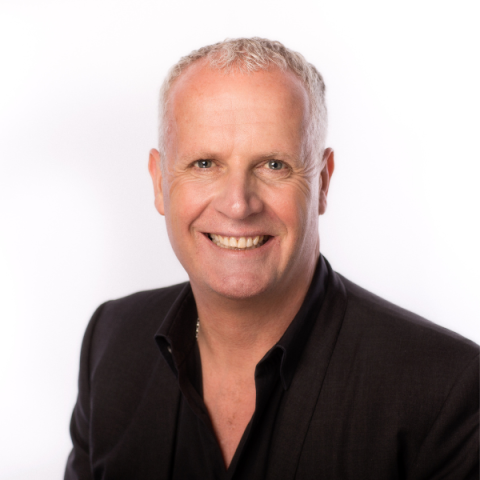
Interview with alumnus Will King
Will King, Honorary doctorate recipient, BEng (Hons) Mechanical Engineering graduate (1987) and Founder of King of Shaves, reveals the secrets of his sustained success — outlining how he overcame recessions, risks, challenges, and established competitors to make his mark in the industry for 30 years.
Will founded the leading men's grooming brand, King of Shaves, back in 1993 starting with an innovative shaving oil product. Since the brand was launched, it has made waves in a competitive market that includes manufacturing titans Gillette and Wilkinson Sword, and Will recently celebrated his 30th anniversary as an entrepreneur.
Budding entrepreneurs can discover how Will launched his business in the early 1990s and used innovative techniques to adapt for prolonged growth whatever the economic weather.
Will shares anecdotes from his time at the University and illustrates core skills that helped him scale up during times of uncertainty and establish a recognised household brand.
As a student, goodness me, I had a good degree of confidence, but I was quite shy and I just remember working hard. Engineering - it was 39 and a half-hour weeks.
You had Wednesday afternoon off. I went sailing so I was part of the sailing club here.
Just got down and worked hard at my Engineering degree and scraped a 2:2 in Mech Engineering.
Pierce Brosnan would play me in a movie.
I think the biggest productivity hack is to be curious, and also find out what the second line to the proverb curiosity killed the cat is.
Because there is a second line and very few people I ask, know what that second line is.
And I do.
And I'll leave it hanging for you to go and get on Google to see what the second line to that proverb is. My passion is sailing.
Unfortunately, I didn't get the results I needed in my A-levels in the eighties to go and study yacht design and naval architecture and then went into sales and marketing.
I was made redundant and then I kind of had nothing, but I decided to do two things be my own boss, and then secondly, solve a problem. The problem I had was shaving.
I had razor burn and rash and created a category of shaving oils that we then launched into the market 30-odd years ago.
Probably inspiring other people over the arc. I mean, of course, you know, building a brand and getting the owner of Harrods to list it personally. And then some stage many years ago, having a footballer called John Terry as our brand ambassador and then as the success of the business has grown, being able to come out to whether it's the University of Portsmouth or to schools or to other areas of learning and perhaps sharing my story in the hope that it might resonate with, you know, people out there that if he did it, I can do it too. Mum and dad, obviously.
Alan Sugar and then of course you had Richard Branson. For me going back, it was very diverse, good, deep breadth of international students and it seemed, it felt quite democratised. It didn't feel elitist, so it felt accessible.
What would my colleagues say about me? I always deliver.
I can somehow achieve the unachievable.
That I'm very product focused and I'm very curious about why things are the way they are.
Past speakers

Shona Silton, Global Agency Director at Meta (previously Facebook), delivered: Behind the Facebook Culture

Olly Shepherd presented: Bombs to Business: Lessons from the Front Line

Josh Robinson, alumnus, Entrepreneur in Residence and Founder of LMSUK, delivered: How to Build and Promote Your Business

Georgia Elliott-Smith, Managing Director, Element Four & UNESCO Special Envoy for Youth and the Environment presented: Disruptive Sustainability - What Does it Take to Drive Meaningful Environmental Change in Business?

Joel Beya, alumnus, Founder of CheekySport and Vibe with Five Co-Host, delivered a passionate keynote discussing his time at University, the challenges of building a successful company while working full-time and making an impact on YouTube

Eve Ladeji, Senior Product Manager at Intercom and alumna, gave us an insightful keynote on e-commerce, mindset, marketing, the impact of AI, and her University journey

Tayo Oguntonade and Antoinette Oguntonade, graduates and Co-Founders of leading digital property platform BrickzWithTipz, shared their insight into the world of property, debunking myths, outlining how young people can access the property ladder and identifying investment opportunities